
Morning stiffness that makes it impossible to grip your coffee cup. Swollen knuckles that resist every attempt to open a jar. A deep, persistent ache that radiates through your palms and wrists long after you have stopped using your hands. For the more than fifty million Americans living with arthritis, these experiences are not occasional inconveniences. They are daily realities that erode independence, disrupt sleep, and transform simple tasks into exhausting challenges. Medications help manage inflammation, and physical therapy preserves range of motion, but many people find themselves searching for additional tools that can provide relief between clinical appointments. The hand massager for arthritis relief has emerged as one of the most accessible and increasingly popular options for managing hand pain at home. Understanding how these devices work, what the research says about their effectiveness, and how to integrate them safely into your arthritis management plan can help you decide whether a hand massager deserves a place in your daily routine.
Understanding Hand Arthritis and Why It Hurts
Arthritis in the hands is not a single disease but rather a category of conditions that cause inflammation, pain, and progressive damage to the joints. Osteoarthritis, the most common form, develops when the protective cartilage that cushions the ends of bones gradually wears away. Without this cushioning, bone rubs against bone, creating friction, pain, and stiffness that worsens with use and improves with rest. Rheumatoid arthritis, an autoimmune condition, follows a different pattern. The immune system mistakenly attacks the synovial membrane that lines the joints, causing swelling, warmth, and deformity that often affects both hands symmetrically. Other forms, including psoriatic arthritis and post-traumatic arthritis, can also target the small joints of the fingers and wrists. What all forms share is the potential to make hand function increasingly difficult over time.
The pain of hand arthritis is multifaceted. Inflammation within the joint triggers chemical signals that sensitize nerve endings, lowering the threshold for pain perception. Swollen tissues stretch the joint capsule and compress surrounding structures, creating a sensation of pressure and tightness. Muscle tension develops around affected joints as the body attempts to stabilize and protect them, leading to secondary pain in the forearms and wrists. Reduced movement causes the synovial fluid that lubricates joints to become less evenly distributed, increasing stiffness after periods of inactivity. This is why mornings are often the most difficult time of day for people with hand arthritis. The combination of these factors creates a pain experience that is not simply about damaged joints but involves the entire surrounding musculoskeletal and nervous system. A hand massager for arthritis relief addresses several of these contributing factors simultaneously, which is why many users report meaningful improvement in their symptoms.
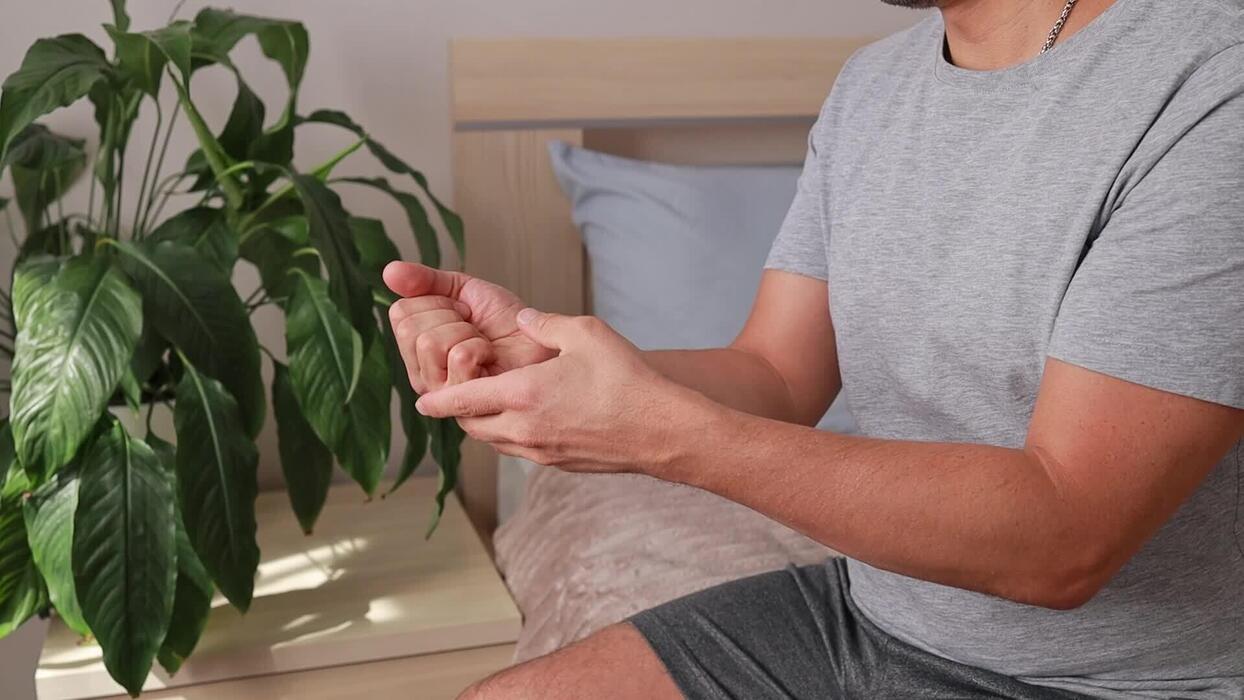
A man gently massages his sore hand joints while sitting at home, illustrating the daily struggle with arthritis pain that many people experience.
How Hand Massagers Actually Work
Modern hand massagers are sophisticated devices that deliver therapeutic effects through multiple mechanisms. The most common technology is air compression, where internal airbags inflate and deflate in sequence to create rhythmic pressure around the hand. This compression mimics the squeezing and releasing motion of a manual massage, promoting circulation and reducing fluid accumulation in the tissues. The sequential nature of the compression, typically moving from the fingers toward the wrist, follows the direction of venous and lymphatic return, encouraging the body to clear inflammatory byproducts and excess fluid from the hand. Some devices incorporate heat therapy, which raises tissue temperature and increases blood flow to the area. Warmth also relaxes muscle tension and can temporarily reduce the perception of pain by stimulating temperature-sensitive nerve fibers that compete with pain signals for attention in the spinal cord.
Vibration and kneading functions represent additional therapeutic modalities found in higher-end devices. Vibration stimulates mechanoreceptors in the skin and underlying tissues, which can interrupt pain signal transmission and create a soothing, distracting sensation. Kneading mechanisms, often using small rollers or nodes, apply targeted pressure to specific points on the palm and fingers, potentially releasing trigger points and breaking up adhesions in the connective tissue. The best hand massager for arthritis relief typically combines several of these technologies rather than relying on a single mechanism. This multi-modal approach allows the device to address pain, stiffness, and circulation simultaneously, which aligns with the complex, multi-factorial nature of arthritis symptoms. Understanding these mechanisms helps explain why the benefits of hand massage extend beyond simple relaxation and into genuine physiological changes that support joint health.
What the Research Says About Massage and Arthritis
The scientific evidence supporting massage for arthritis relief has grown substantially over the past two decades. A landmark study published in the Journal of Bodywork and Movement Therapies examined twenty-two adults with hand or wrist arthritis, randomly assigning them to either a massage therapy group or a standard treatment control group. The massage group received weekly professional massage sessions and performed daily self-massage at home over a four-week period. The results were striking. Participants in the massage group reported significantly less pain and greater grip strength compared to the control group. They also showed measurable improvements in anxiety and depressed mood scores, highlighting the interconnected nature of chronic pain and emotional well-being. This study was particularly important because it was the first controlled research specifically targeting hand arthritis with massage therapy, and it established a foundation for subsequent investigations.
More recent research has expanded these findings. A 2011 study comparing massage therapy to a control group found that participants with hand pain experienced not only reduced pain but also improved grip strength after four weeks of treatment. The massage group additionally showed greater improvements in sleep quality, anxiety levels, and overall mood, suggesting that the benefits of hand massage extend well beyond the joints themselves. The Arthritis Foundation has reviewed this evidence and concluded that regular hand massage can improve strength, reduce pain, and alleviate the anxiety and depression that often accompany chronic arthritis. Massage therapy achieves these effects through multiple pathways. It increases local circulation, which delivers oxygen and nutrients to tissues while removing inflammatory mediators. It stimulates the release of endorphins, the body's natural pain-relieving compounds. It reduces cortisol levels, which decreases systemic inflammation and stress. For people considering a hand massager for arthritis relief, this research provides meaningful reassurance that the underlying principles are sound, even if the specific device has not been individually studied in a clinical trial.
A therapist performs a professional hand massage, demonstrating the targeted pressure techniques that research has shown to reduce arthritis pain and improve grip strength.
Types of Hand Massagers and Their Features
The market for hand massagers has expanded rapidly, and the variety of available options can be overwhelming. Understanding the main categories and their distinguishing features helps narrow the selection to devices that genuinely match your needs. Electric compression massagers are the most common type designed specifically for arthritis relief. These devices enclose the entire hand in a glove-like chamber and use airbags to deliver sequential compression from the fingers to the wrist. Most offer multiple intensity levels, allowing users to start gently and increase pressure as tolerated. Heat is a common additional feature, with temperatures typically ranging from one hundred to one hundred ten degrees Fahrenheit. Some models include vibration functions that add a tingling, stimulating sensation to the compression cycle. The LX7 and similar devices designed specifically for arthritis and carpal tunnel syndrome use gentler compression profiles than sports-focused models, making them more appropriate for sensitive, inflamed joints.
Manual massagers represent a lower-tech, more affordable alternative. These include roller balls, textured massage rings, and acupressure tools that require the user to actively manipulate them against the hand. While they lack the convenience of automated devices, they offer precise control over pressure and location, which some people prefer. They also require no power source, making them portable and silent. Percussion massage guns, originally designed for large muscle groups, can be adapted for hand use with specialized attachments. These deliver rapid, targeted pulses of pressure that penetrate deeply into tissue. However, they require more skill to use safely on the small, delicate structures of the hand and may be too intense for some arthritis sufferers. When selecting a hand massager for arthritis relief, prioritize features that match your specific symptoms. If stiffness is your primary concern, heat and gentle compression are most important. If you experience significant swelling, look for devices with sequential compression that promotes fluid drainage. If muscle tension in your forearms contributes to your hand pain, consider a model that extends massage coverage beyond the hand itself.
How to Use a Hand Massager Safely and Effectively
Owning a hand massager is only beneficial if you use it correctly. Safety considerations are paramount for people with arthritis, whose joints may be structurally compromised, unstable, or in an active inflammatory phase. Always consult your rheumatologist or hand therapist before starting any new therapeutic modality, especially if you have recently experienced a flare-up, have undergone joint surgery, or have significant deformity in your hands. Most clinicians agree that massage is safe during periods of relative stability but should be avoided during acute flares when joints are hot, intensely painful, or visibly more swollen than usual. Starting with the lowest intensity setting is essential, even if you have used similar devices before. Arthritic joints are more sensitive than healthy tissue, and what feels comfortable to someone without arthritis may be excessive for you. Begin with one or two sessions per day, lasting five to ten minutes each, and monitor your response over the following twenty-four hours.
Proper positioning enhances both safety and effectiveness. Insert your hand fully into the device so that your fingers extend to the end of the chambers and your wrist rests comfortably at the opening. Avoid forcing your hand into a device that feels too small, as excessive compression can aggravate rather than relieve symptoms. If the device includes heat, allow it to reach operating temperature before inserting your hand, and never use heat on a joint that is actively inflamed or warm to the touch. After each session, gently move your fingers through their available range of motion to take advantage of the warmth and increased circulation. This combination of massage followed by movement can significantly reduce morning stiffness when performed as part of your waking routine. Consistency matters more than intensity. A hand massager for arthritis relief delivers cumulative benefits when used regularly rather than sporadically. Many users find that incorporating a session into their morning routine and another before bed provides the most sustained improvement in symptoms.
Integrating Hand Massage Into Your Comprehensive Arthritis Plan
A hand massager is a valuable tool, but it is not a substitute for comprehensive arthritis management. The most effective approach combines multiple strategies that address different aspects of the disease. Medications prescribed by your rheumatologist remain the foundation of treatment for most forms of arthritis, particularly autoimmune types like rheumatoid arthritis where disease-modifying drugs can slow or halt joint damage. Physical and occupational therapy provides targeted exercises that preserve range of motion, strengthen the muscles that support affected joints, and teach adaptive techniques for daily tasks. Splinting can protect vulnerable joints during activities that would otherwise strain them. Ergonomic modifications to your home and workspace reduce the mechanical stress that accumulates during repetitive tasks.
Hand massage complements these interventions by addressing the soft tissue components of pain that medications and exercises may not fully reach. It can be particularly valuable during periods when you are waiting for medication adjustments to take effect, or when you want to reduce reliance on oral pain medications. Some users find that regular hand massage allows them to maintain better adherence to their exercise programs because their hands feel more comfortable and responsive. Others report improved sleep quality when they use their hand massager before bed, which in turn supports overall health and immune function. The key is to view the hand massager for arthritis relief as one component of an integrated system rather than a standalone solution. Track your symptoms, note which combinations of interventions provide the best results, and adjust your routine accordingly.
What to Expect and When to Be Patient
Realistic expectations are essential when beginning any new arthritis therapy. Hand massagers do not cure arthritis, reverse joint damage, or eliminate the need for medical treatment. What they can do is reduce pain intensity, decrease stiffness, improve circulation, and enhance your overall sense of comfort and control. Some people notice improvement after their very first session, particularly in terms of warmth and relaxation. For others, the benefits accumulate more gradually over several weeks of consistent use. This variation is normal and depends on factors including the type and severity of your arthritis, which joints are most affected, your overall health status, and how consistently you use the device.
Pay attention to your body's signals. Mild soreness after a massage session is normal, particularly if you are new to the therapy or have increased the intensity. This soreness should feel similar to the sensation after gentle exercise and should resolve within a few hours. Sharp pain, increased swelling, or warmth that persists into the next day suggests that the intensity was too high or that the timing was inappropriate for your current disease activity. Adjust accordingly and consult your healthcare provider if you are unsure. Remember that arthritis is a dynamic condition with good days and difficult days. Your hand massager routine should be flexible enough to accommodate these fluctuations, providing more intensive support during stable periods and gentler, more conservative use during flares.
Conclusion: A Practical Tool for Daily Relief
Living with hand arthritis requires adapting to a body that no longer cooperates as it once did. The small losses accumulate, the adaptations become more complex, and the emotional toll of chronic pain can be as heavy as the physical burden. In this context, any tool that provides genuine relief without significant risk or cost deserves serious consideration. The hand massager for arthritis relief offers a non-invasive, drug-free option that you can use in your own home, on your own schedule, with increasing precision as you learn what works best for your specific symptoms. The research supporting massage for arthritis is robust, the mechanisms are well understood, and the technology has matured to the point where effective devices are available at a range of price points.
If you are struggling with hand pain that limits your daily activities, consider discussing hand massage with your healthcare provider. If you receive clearance, explore the available devices with an eye toward your specific needs and preferences. Start slowly, use consistently, and evaluate your results over time. Your hands have served you through every task, every gesture, every expression of care and creativity that has defined your life. They deserve the best support you can provide. A hand massager may not restore them to their former state, but it can help you preserve function, reduce suffering, and maintain the independence that arthritis too often threatens to take away.